
Ludovika Roundtable Explores Contemporary Realities and Perspectives on Africa
The Ludovika University of Public Service hosted a thought-provoking roundtable discussion under the African Mapping Research Initiative, led by Richard Baafi with the support of Loránd Ujházi on Thursday, 26th March 2026. The event brought together African scholars, researchers, and professionals based in Hungary, representing diverse areas of expertise relevant to contemporary African scholarship.
The meeting created an important space for reflection on the many realities shaping the African continent today. Through a wide-ranging exploration of Africa’s challenges, strengths, contradictions, and possibilities, it brought into sharper focus the continent’s complexity and the need to engage its realities with nuance, sensitivity, and intellectual honesty. This broad reflection naturally led to one of the strongest themes of the discussion: the question of leadership.
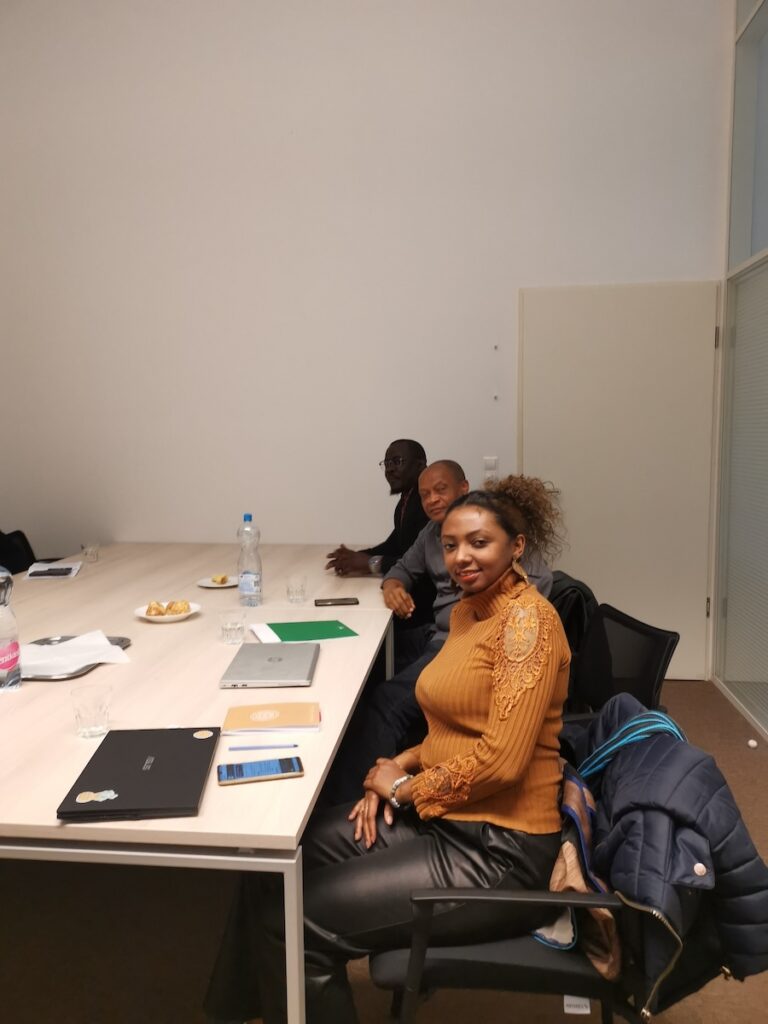
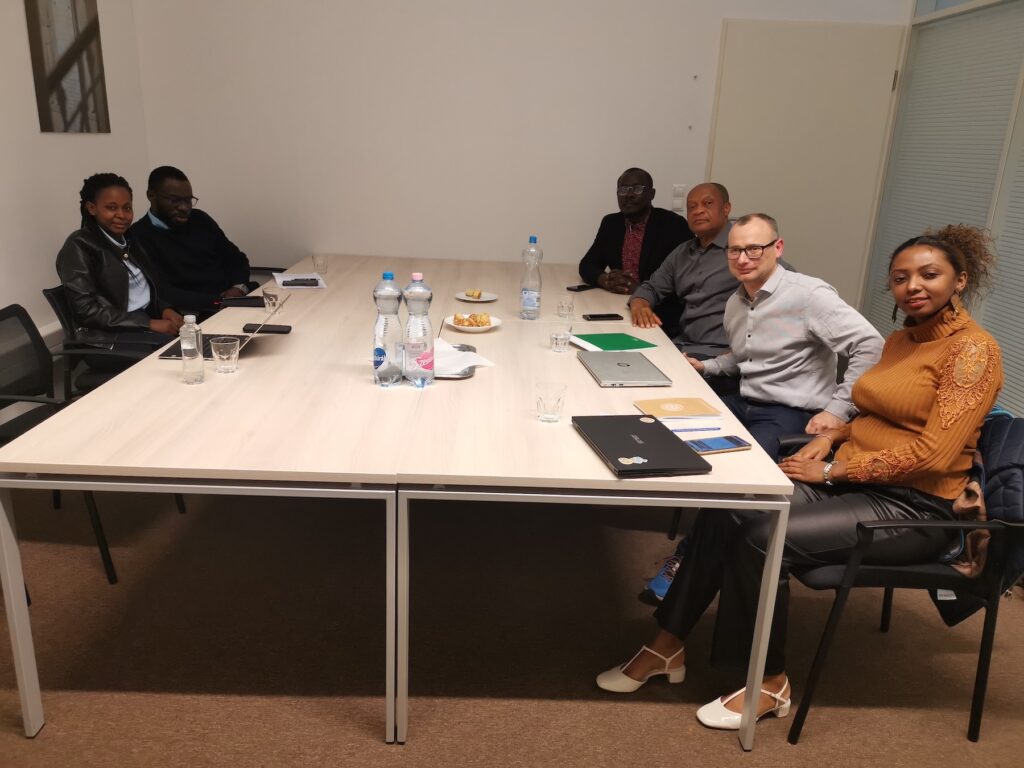
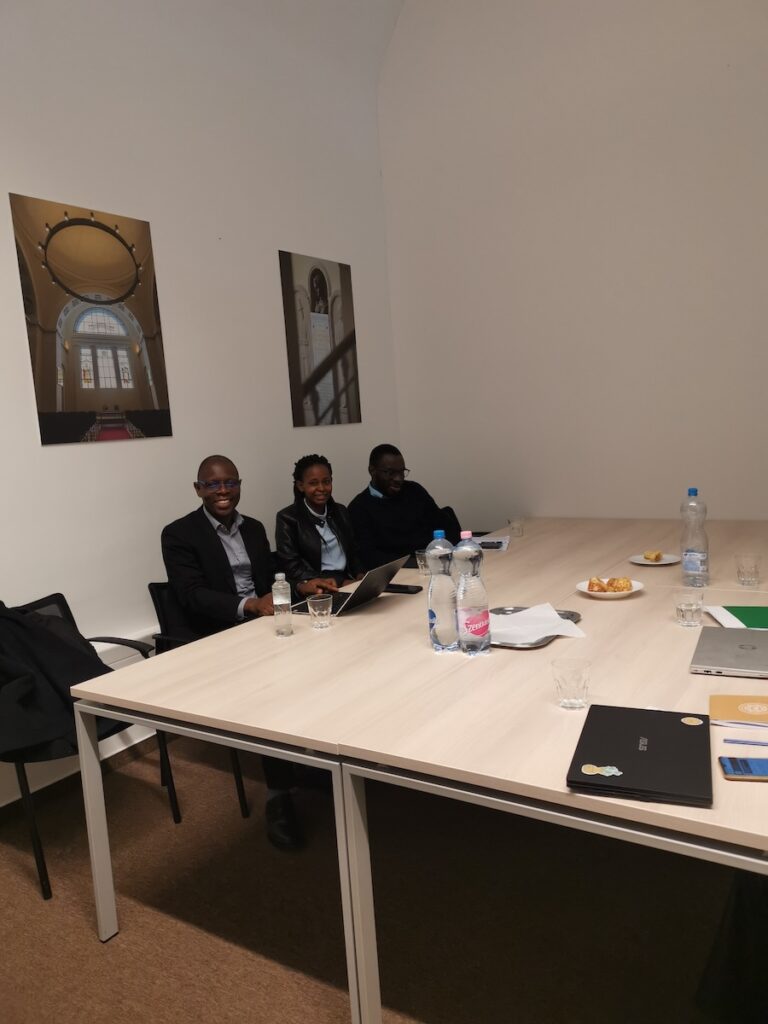
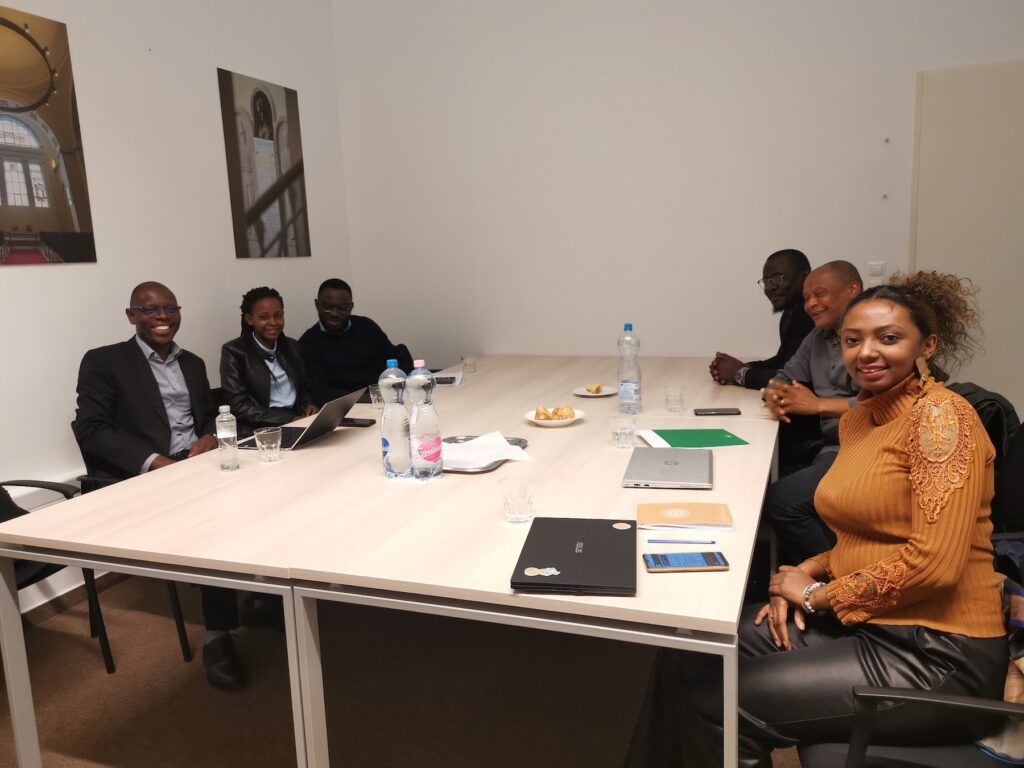
Photos: Institute for Religion and Society
The conversation returned to the conviction that leadership remains one of the defining issues in Africa’s present condition and future direction. Many of the concerns raised during the roundtable were linked, directly or indirectly, to the quality of governance, institutional responsibility, and public accountability across the continent. Insecurity, poor resource management, land-use tensions, illegal mining, weak pricing systems, and post-harvest losses were all seen not as isolated problems, but as issues closely tied to the wider challenge of responsible and visionary leadership.
The data availability was presented as another major obstacle to understanding and responding to Africa’s realities. It was noted that one of the continent’s enduring difficulties is the limited access to reliable data capable of telling Africa’s story accurately and meaningfully. The panelists admitted that without sound data, it becomes difficult to frame problems well, formulate effective policy, or communicate the true scale and texture of local realities. Yet the roundtable made clear that the challenge does not end with data collection alone. Language, interpretation, and publication are equally important, because when knowledge is poorly communicated the communities most affected are often excluded from conversations that concern them directly.
That point opened the way to an equally important insight: the role of indigenous knowledge and the urgent need for knowledge transfer and dissemination. Several contributions stressed that Africa’s realities cannot be adequately understood through external models alone. Local knowledge remains indispensable for interpreting environmental, social, and economic conditions in ways that are grounded in lived experience. In this sense, foundations matter greatly, because they shape the direction and quality of the solutions that follow. Where those foundations are weak, detached, or imposed from outside, responses can remain superficial, however well-intentioned they may be.
Seen from this perspective, one of Africa’s enduring paradoxes came more sharply into view. The continent is richly endowed with natural resources, cultural wealth, and human potential, and yet many societies continue to struggle with acute poverty, drought, underdevelopment, and the absence of basic structures necessary for flourishing communities. Madagascar was mentioned as a striking example of this contradiction reflecting a wider continental resemblant trait. Although Africa is endowed with abundant human and natural resources many regional blocks continue to bear the marks of deprivation and fragility. This paradox became even more concrete when the discussion turned to livelihoods and the daily realities.
Agriculture, which remains the backbone of many African economies, featured prominently in the discussions. Some contributors averred that many local farmers are doing poorly because they lack access to updated technical expertise, often relying heavily on traditional farming methods that can, in some cases, damage the soil and affect food safety. The difficulty is compounded by the limited agricultural extension structures, while meteorological systems are not always in a position to provide timely early-warning data that could help mitigate climate-related risks. These challenges are not peculiar to agriculture and livelihoods but demonstrate the broader questions about natural resource governance and justice.
The roundtable discussions likewise drew attention to the negative influence that external powers sometimes exert through resource control, especially in the area of mining without sufficient regard for local communities or national wellbeing. For instance, illegal mining was cited as one visible sign of this wider problem. Beneath such concerns lies a more fundamental issue regarding how national resources are governed, distributed, and protected in ways that truly serve the common good rather than deepen inequality, dependency, or local suffering. It was evident that Africa’s situation needs a broader and more integrated understanding.
Tourism has significantly contributed in showcasing the beautiful and dynamic aspects of Africa. Far from being treated as a narrow economic sector, tourism presents social and cultural opportunities that cut across dimensions of life. Africa’s tourism potentials were described as broad and diverse, touching communities, identities, perceptions, livelihoods, and national image. Perception about the continent emerged as a critical factor that either builds understanding and value or reinforces misunderstanding and tension. It is essential for all sectors to promote local engagement. The roundtable discussions acknowledged that ignoring the experiences and perceptions of communities can create conflict, whereas inclusive engagement can strengthen wellbeing and shared benefit.
Analysing different strands of the conversation, it became increasingly clear that Africa’s problems cannot be reduced to science, economics, or policy alone. The realities are also deeply social, cultural, moral, and political. These include gender issues, cultural limitations, ethnic politics, marginalisation, and weak democratic governance all surfaced as important parts of the wider picture. Similarly, the discussions emphasised that the continent’s problems are sometimes rooted in historical experiences. The resultant of these experiences influences present tensions, sometimes resulting in extremism, violence, and insurrection. It was in this context that the role of reconciliation was highlighted as significant. In the opinion of the panel, courts do not always resolve historical matters fully, but reconciliation can open the possibility of healing damaged relationships and rebuilding social trust.
Recognising moral and human dimensions of Africa’s challenges helps explain why the role of faith communities featured so strongly in the roundtable. The Catholic Church, in particular, was identified for her roles in accompanying suffering communities and responding to both immediate and long-term human needs. Reference was made to examples such as the Diocese of Makurdi, where the Church continues to stand with people facing severe hardship. Such examples served as a reminder that any serious account of Africa’s realities must also take into consideration the contribution of religion, theology, and moral leadership in public life, especially where institutions of trust and solidarity are under pressure.
The reflections underscored the need to understand Africa through an interconnected framework rather than through isolated categories. Ecology, governance, agriculture, migration, knowledge systems, culture, religion, and social wellbeing all intersect in ways that demand careful and holistic analysis. If the realities of the continent are to be profiled meaningfully, they must be approached concurrently. That is precisely what made this roundtable so valuable. It created a space where different forms of knowledge could meet and where Africa could be discussed not as an abstraction, but as a living and complex reality. Consequently, the event marked an important moment for the African Mapping Research Initiative at Ludovika University of Public Service. By creating a platform in which African voices and experiences can be heard within an international academic setting, the initiative is helping to foster a deeper and more grounded understanding of the continent’s realities. At the same time, it opens new avenues for future research, collaboration, and engagement that are both intellectually rigorous and practically relevant.
The roundtable discussion stood as a reminder that Africa’s story is both complex and compelling. It is a story marked by challenges, but also by resilience, by contradiction, but also by possibility. It is believed that through conversations such as this, Ludovika University of Public Service continues to open space for richer and more meaningful engagement with the continent, not only by studying Africa, but also by listening attentively to those who know its realities from within.
Photo credit: Wollwerth / depositphotos.com