


The atom at the heart of European defence and energy policy
In the past two weeks, the atom has taken a central role in France, currently experiencing local elections, and also on the continent as a doctrine that President Macron can extend to the whole of Europe. In the first place, in the form of the protection provided by the French nuclear shield for Europe, which is rapidly arming itself in response to the Russian threat. Subsequently, in light of the energy crisis emerging in the context of the American-Israeli attack on Iran and the Tehran response to these, Emmanuel Macron emphasized the civilian use of nuclear energy as the main (if not the only) means of European energy independence ans sovereignty. President Macron represented France as a “nuclear superpower”, once again bringing the nuclear option to the fore – not only in terms of energy, but also in terms of defence.
Historical background in a nutshell
To understand the development of the French nuclear pillar and its strengthening role in the shadow of the geopolitical challenges of recent years, it is necessary to briefly outline the antecedents that underpin the French nuclear strategy.
The foundations of the French military strategy based on nuclear deterrence were laid by Charles de Gaulle. The concept of the “force de frappe” of the French president who founded the Fifth Republic in 1958 appears as the depositary of the country’s strategic independence. However, the Gaullist nuclear power concept also anticipates the intertwining of civilian and military nuclear infrastructure. This is also due to the strategic nature of the industrial chain formed by the large French energy companies (EDF, CEA, Framatome, Areva).
The European context
The discourse that President Macron has used or re-introduced in recent days, placing Europe under France’s nuclear protection, is by no means new. The country has been lobbying for a unified European approach to nuclear energy since the 1970s.
The renaissance of nuclear energy in recent years is undoubtedly helping. After the energy price explosion and the exclusion of Russian gas, several member states are reassessing their relationship with nuclear energy.
At the same time, the issue of the use of nuclear energy is a perennial topic of debate between France and Germany in Brussels. The Germans still consider it too expensive and dangerous. The treatment of the waste it produces is primarily a source of long-lasting resentment in the country.
The Fukushima nuclear power plant accident accelerated the exit from nuclear energy in Germany. This serious accident, which occurred 15 years ago, in 2011, shocked public opinion. (It should be noted that Japan, now led by the conservative Takaichi Sanae, is also gradually returning to nuclear power.) The German parliament voted by a large majority to close all nuclear power plants by 2022. It also approved the immediate shutdown of the seven oldest reactors, which were built before 1980.
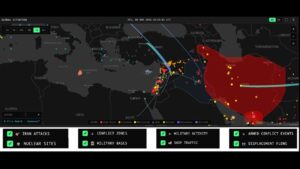
The sudden rise in gas and oil prices, triggered by the US and Israeli air strikes on Iran, could have reopened the debate in Germany about the country’s energy sovereignty. This did not happen. On the contrary: the statement by the President of the European Commission, Ursula von der Leyen, on March 10, in support of the development of nuclear energy in Europe, in which she called its curtailment a strategic mistake, provoked fierce opposition. The phasing out of nuclear energy in Germany is “irreversible,” Chancellor Friedrich Merz declared.
The strategic and defense dimensions of nuclear energy
Emmanuel Macron, referring to the de Gaulle tradition, also prioritizes the issue of sovereignty based on deterrence. He emphasizes energy sovereignty and self-sufficiency as the foundations of strategic defense. Behind all this reasoning, of course, are huge French industrial and related financial interests.
Therefore, prioritizing the dual (civilian-military) use of nuclear technology is clearly in France’s interest.
France is the only EU member state that is a nuclear power and a member of the UN Security Council. This gives political weight to its energy model and at the same time legitimizes it.
During his presidency, Emmanuel Macron consistently emphasized the connections between nuclear energy and the green transition, fulfilling the objectives of decarbonized industry set out in the European Green Deal.
Challenges and contradictions
The biggest challenge is precisely the German-French tensions that characterise EU energy policy. The idea of a common loan to strengthen European defence, as urged by Emmanuel Macron, is unthinkable for the German administration led by Friedrich Merz. Fear of an indebted and politically unstable France seems to be increasingly prevalent in German politics. However, the new geopolitical situation could also reshape Germany’s position. On February 13 in Munich, Chancellor Merz mentioned his “confidential discussions” with Emmanuel Macron regarding “European nuclear deterrence.”
It can also rearrange positions. On February 13, Chancellor Merz mentioned his “confidential discussions” with Emmanuel Macron on “European nuclear deterrence” in Munich.
Another questionable point is the balance between the development of nuclear and renewable energy, and above all the fact that such a focus on nuclear energy means a reduction in renewable energy sources. This is another crack in the already crumbling edifice of the Green Deal.
The atom as a geopolitical card
For France, nuclear energy is not just an energy policy tool, but also a factor of power.
Emmanuel Macron announced a “significant development” of French nuclear doctrine in a highly anticipated speech at the Ile-Longue base in the Gulf of Brest (Finistère) on March 2. The president detailed an updated version of France’s nuclear deterrence strategy “that meets both national and European challenges.”
In response to the “combination of threats”, the head of state first announced the “gradual” introduction of “advanced deterrence”, drawing attention to the need to “rethink France’s deterrence strategy in the European depths of the continent, with full respect for [its sovereignty]”.
This speech is in fact a continuation of the serious speech delivered to his compatriots almost exactly a year ago, in which President Macron stressed the Russian threat and urged a decisive response to it, in the form of strengthening French and European defense.
In his most recent speech on March 2, President Macron also emphasized that the Europe of the future will be an arena for competition for technological sovereignty and energy security – with the French nuclear model playing a central role, of course. In doing so, he offers a solution to the dilemma of Europe’s energy security, emphasizing energy independence and strategic sovereignty as new EU priorities.
Emmanuel Macron hosted a nuclear summit in Paris on Tuesday, March 10, with the participation of some 60 countries, to give new “boost” to the revival of civil nuclear energy. The French president stressed that the current energy crisis, culminating in the closure of the Strait of Hormuz, should not call into question the policy of sanctions against Moscow.
In a situation plagued by global energy crises, Emmanuel Macron is calling on states and investors to accelerate the revival of civil nuclear energy.
Compensating for the loss of domestic political credit
The municipal elections scheduled for March 15 and 22 will certainly send another message to the presidential bloc, sanctioning its extremely unpopular policies.
Given the president’s historically low popularity (which in this case should be called unpopularity), Emmanuel Macron is understandably seeking laurels on the international stage. And for the sake of honesty, let’s also add that – at least compared to his domestic performance – he has been significantly more successful.
Furthermore, this two-round election plays an even more significant role in French political life, as it will be the last time French voters go to the polls before the presidential election in spring 2027. And no matter how spectacular Emmanuel Macron’s foreign policy performance is, he seems less and less convincing within the borders of his country.
Image: andriano_cz / depositphotos.com